

Data and Analytics: why we work with hospices
Data and Analytics: why we work with hospices

Data and Analytics: why we work with hospices
Changing landscape
Like many of us delivering healthcare in collaboration with the NHS, hospices are experiencing the dilemma of not being an NHS organisation but needing to know our way around the landscape of data as if they are.
Faster Data Flows
For example, programmes such as ‘Faster Data Flows’ designed to provide and share timely data across care providers, Integrated Care Boards (ICB’s) and NHS England to ‘improve the flow and speed of data to support local, system and national decision making’. Quite rightly, hospices are being asked to participate, and it is important that they do, because that’s what it means to be part of the NHS data landscape, and the NHS pays for what it can see.

From treatment to management
What this means is the treatment paradigm needs to shift. For at least 65% of the time, we need to be focused on and enabling ‘management’ over treatment. That means a deep collaboration – led by the citizen, to understand how they want to manage their health condition and integrate this management approach into their daily life, to make sure they have the life that matters to them.
The language of healthcare: time for a rewrite
This frame does not feel shocking to me, and yet the implicit rules that underpin how we deliver healthcare suggest that this approach will be deeply radical. Nowhere is this more present than in the language we use to describe healthcare interactions. We ‘consult, prescribe, treat, review, discharge’. Patients ‘wait, present, comply, disengage or DNA’. We talk in acronyms and euphemisms, about CVD, COPD, CVA, about activation levels, health literacy, risk factors and the ‘hard to reach’.
We treat episodically, with little view of the whole person or their whole lifespan.
Listening with curiosity, humility, and a willingness to let go of assumptions is a radical act, one that can unlock different outcomes.
From patient to person
We ask if they are taking their prescribed medication daily, not if they are walking, talking to others, living in a place they can call home with good work, good friends and a good life.
Only rarely do we connect as humans, acknowledge what matters most, and work together to enable it to happen. Joy, connection, quality of life do not show up in our lists of key performance indicators or our measures of productivity.
Listening is a radical act
Part of what gets in the way is the rigorous training, expertise and experience that sits in the hands of our health professionals. With so much hard-won knowledge and skill, it is challenging to adopt a listening approach, to acknowledge that what we care so passionately about may be of secondary importance to the patient in the room.
Listening with curiosity, humility, and a willingness to let go of assumptions is a radical act, one that can unlock different outcomes.
Charting a new course, Rethinking Our Health project
We know a different approach can work. In the pockets around the country that Adam highlights, new types of conversations are happening, and communities are uniting with new purpose. We’re excited to be exploring how to ‘rethink our health’ in a project at Here. We hope to both design and test new ways of connecting healthcare to communities – to map how healthcare services best ‘dock’ to places and the people they serve is our primary focus.
Alongside this, we want to track how change happens, what makes it possible and sustainable, and to share our learning as widely as we can.
We’re still early in this journey, but we believe this is where the most important work lies, and we’re not alone.
If you’re rethinking health too, we’d love to connect.
We’ll be sharing our learning as the project develops – publishing regular reflections on what works and what doesn’t.
Sign up to updates direct to your inbox
Also of interest
Rethinking Our Health: Why it matters
Introducing Rethinking Our Health – a new way of working with communities to support people living with long-term conditions.
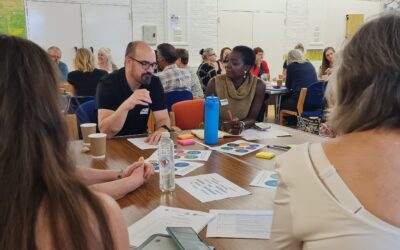
Ingredients for community codesign: a venue, some flipcharts, a bowl of soup and a lot of trust
Introducing Rethinking Our Health – a new way of working with communities to support people living with long-term conditions.
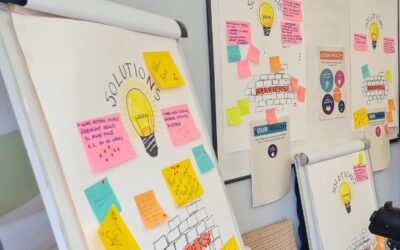
Rethinking Our Health: co-designing better support for long-term health conditions in Sussex
Introducing Rethinking Our Health – a new way of working with communities to support people living with long-term conditions.